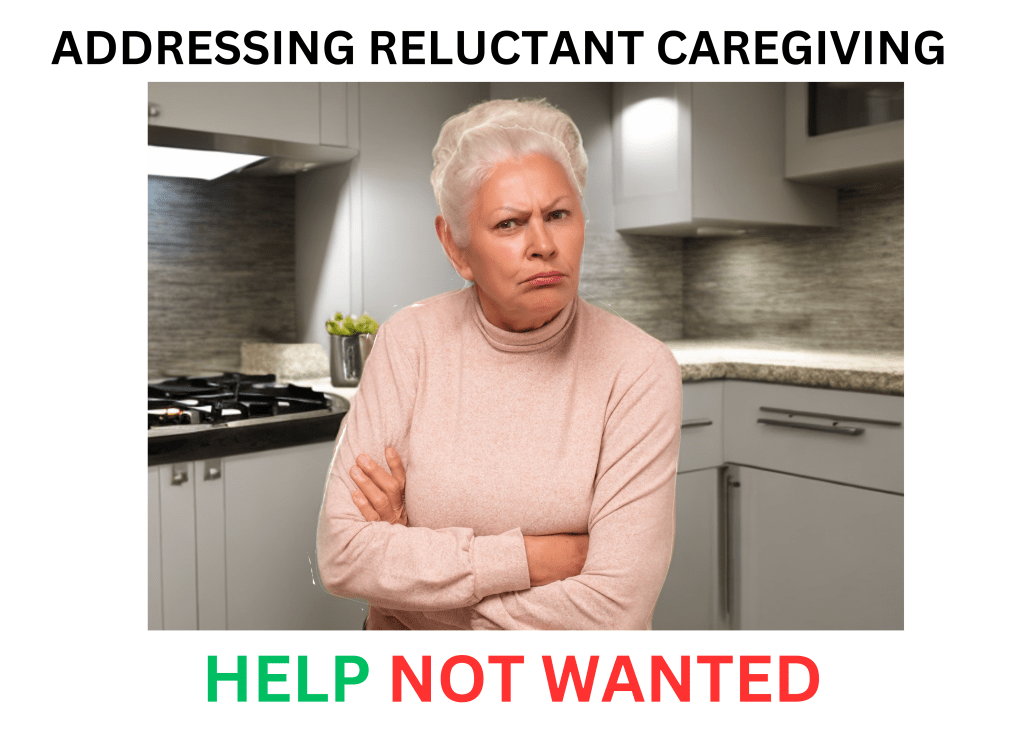
ADDRESSING RELUCANT CAREGIVING
When trying to convince someone who needs caregiving but is resistant to it, it is very important to use language that is empathetic, respectful, and supportive. Here are some tips on how to frame your conversation:
Here are 10 tips on what to do when caregiving is needed but not wanted.
- Express Concern, Not Control: Begin by expressing your concern for their well-being. Use phrases like, “I care about you and your health,” or “I’ve noticed some changes that worry me.”
- Focus on Independence: Emphasize how caregiving can help them keep their independence. Say things like, “Having someone to help can actually let you be more independent,” or “This is about supporting you to do the things you love.”
- Listen and Acknowledge: Listen to their concerns and fears. Be sure to acknowledge their feelings by saying, “I understand why this feels overwhelming,” or “It’s okay to be uneasy about this change.”
- Highlight the Benefits: Discuss the positive aspects of caregiving. Mention things like, “A caregiver can help with tasks that are getting harder, so you have more energy for enjoyable activities,” or “It can be reassuring to have someone around in case of emergencies.”
- Use Collaborative Language: Use words that promote collaboration, like “Let’s figure this out together,” or “What are your thoughts on what kind of help would be useful? Let them be a part of the decision making.
- Respect Their Autonomy: Make it clear that their opinions and choices are important. Say, “I want to make sure we find a solution that you’re comfortable with,” or “Your independence and choices are a priority in this decision.”
- Offer Reassurance: Reassure them of your support and love. Phrases like, “I’m here for you, no matter what,” or “We’ll go through this together,” can be very comforting.
- Be Patient: Remember that this is a major change for them. Be patient and give them time to process the information and their feelings. Being impatient can cause more resistance.
- Seek Their Input: Ask them about their preferences, like, “What qualities would you like in a caregiver?” or “What kind of help do you think would be most useful?”
- Be Prepared for Resistance: If they resist, do not argue. Instead, say, “I understand you are not ready to make this decision now. Let’s talk about this in a few days.” In other words, end the conversation on a positive note. You might hear “we don’t need to have this conversation again”, but revisit when you feel that it would be detrimental not to have further conversation.
Using these approaches, you can create a supportive, caring and understanding atmosphere that acknowledges their fears and concerns while gently guiding them towards accepting the help they need. Remember, you might have to have several conversations before they accept the fact that they do need some form of caregiving.
 Relationships and Communication
Leave a comment